
B
orn in the Jazz Age, baguette-cut diamonds became the building blocks of Art Deco jewelry. They formed structural elements, punctuating wide bracelets, accenting corners of brooches and making up components of pendant earrings among many other things. While they were not used often, if ever, as the centerpiece of designs, the rectangular shaped gem maintained a high profile in the modern style.
Header image courtesy of Nikos Koulis
The term “baguette” is a French word that many, including yours truly, believe was applied to the diamond shape because of its resemblance to the long loaves of French bread that were named “baguettes” in 1920.
Renna
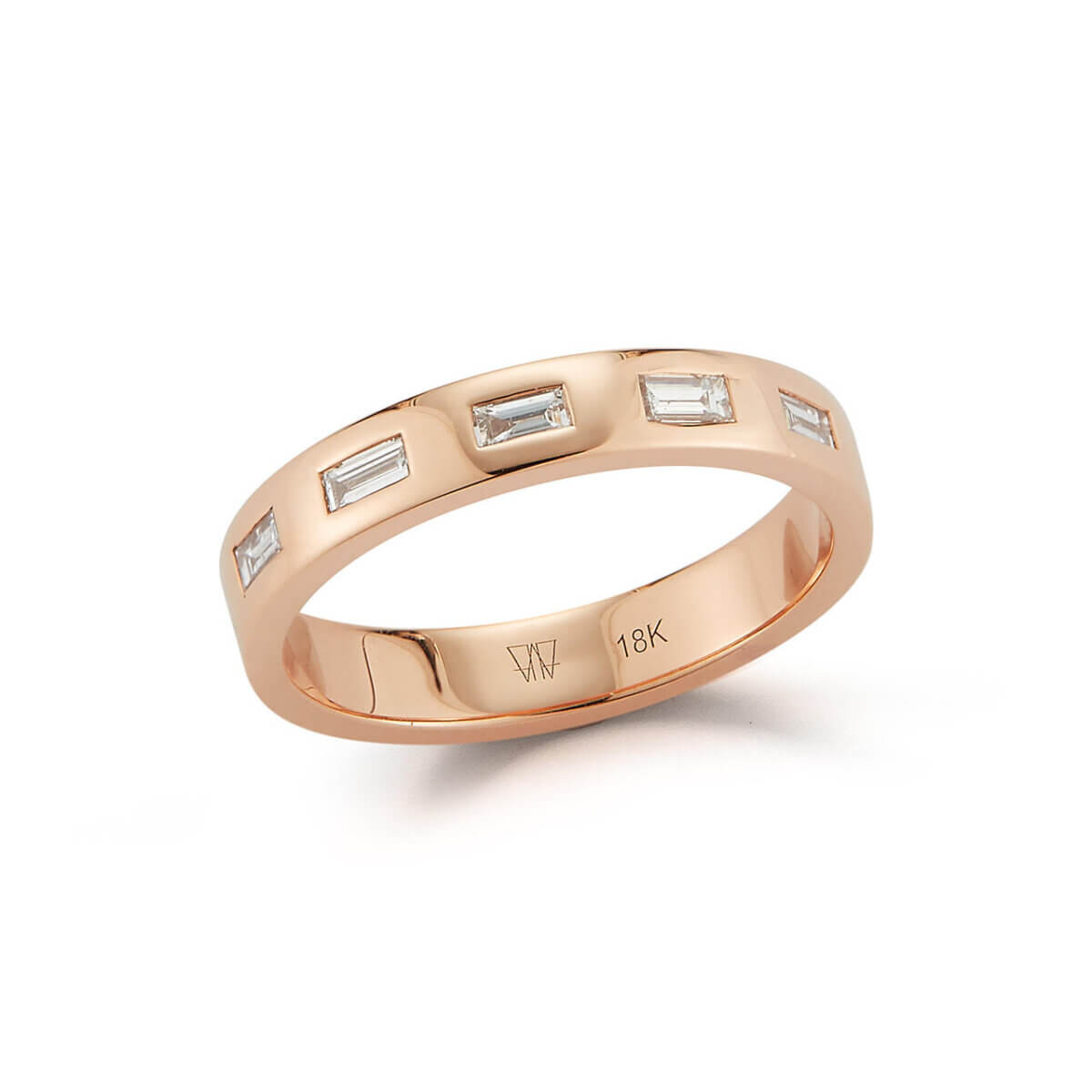
Image courtesy of Walters Faith
The term “baguette” is a French word that many, including yours truly, believe was applied to the diamond shape because of its resemblance to the long loaves of French bread that were named “baguettes” in 1920. Others think the term for “baguette” diamonds stems from the alternative meanings of the French word, which are rod, stick and baton.
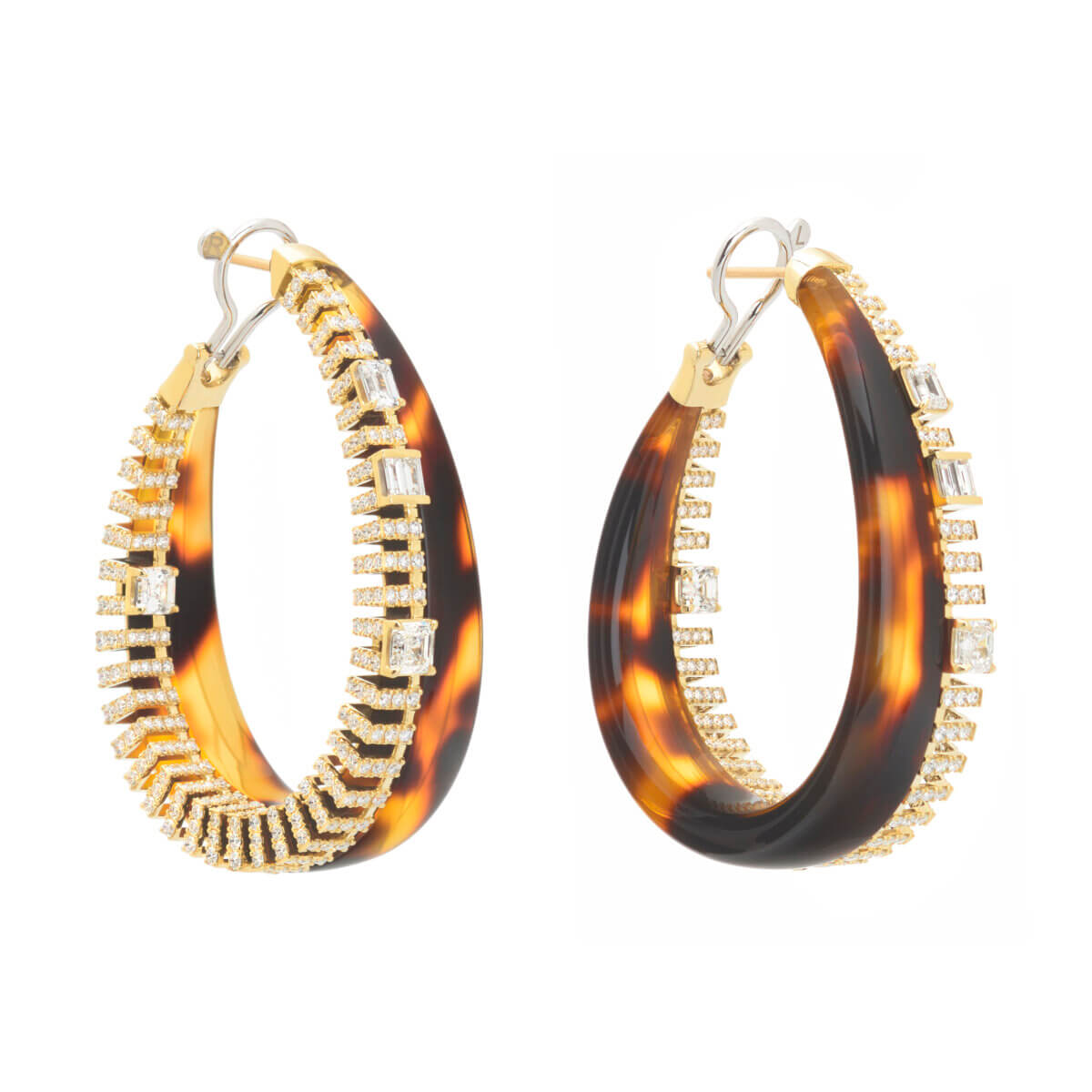
Image courtesy of Nikos Koulis
While the diamond shape obviously relates to those words, the connection to the bread, it must be said, makes a better story. Plus, there is precedent for jewelry terminology to reflect culture during the 1920s. For example, emerald cut diamonds, which are another child of the Jazz Age, received their confusing name, because the same shape was popularized in emeralds first.
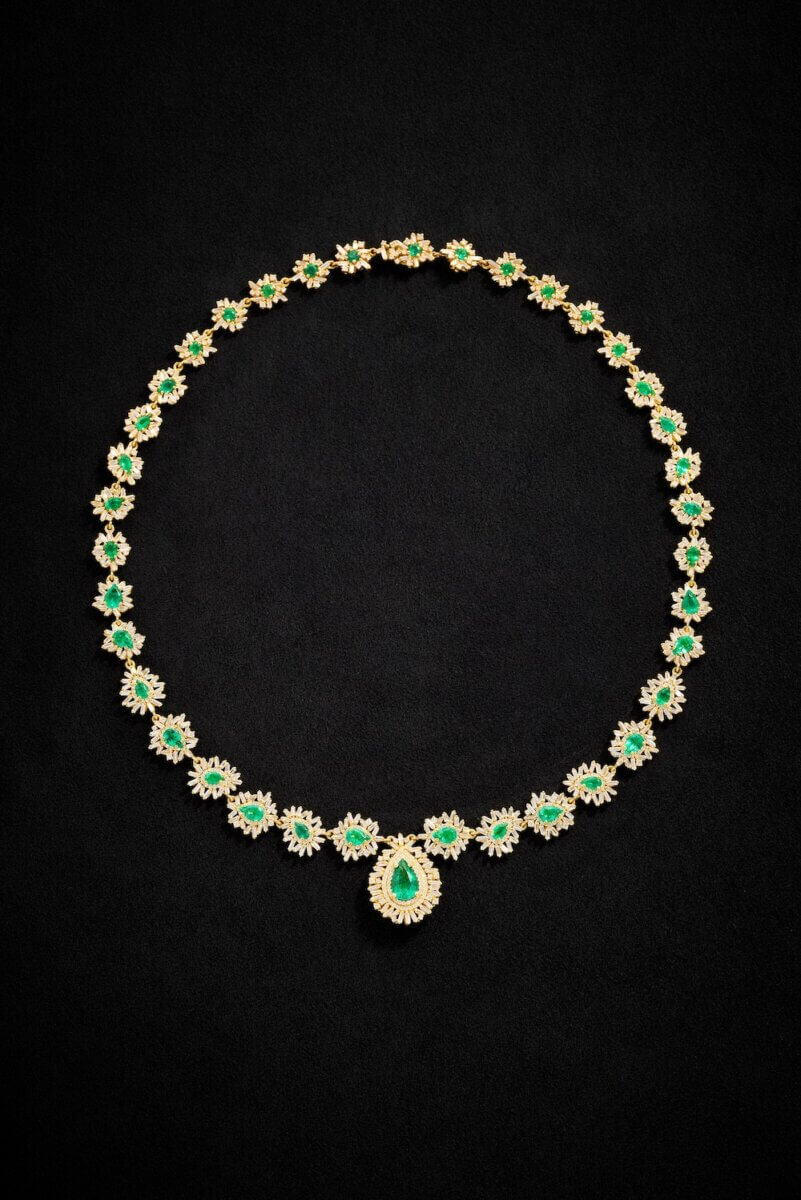
Image courtesy of Suzanne Kalan
While the baguette-cut diamond has remained a constant in jewelry since it was invented and named over a century ago, it is arguably playing some of its most interesting and featured roles right now. COUTURE designers including NIKOS KOULIS, RENNA, SUZANNE KALAN and WALTERS FAITH all use it in ways that reflect their unique styles.
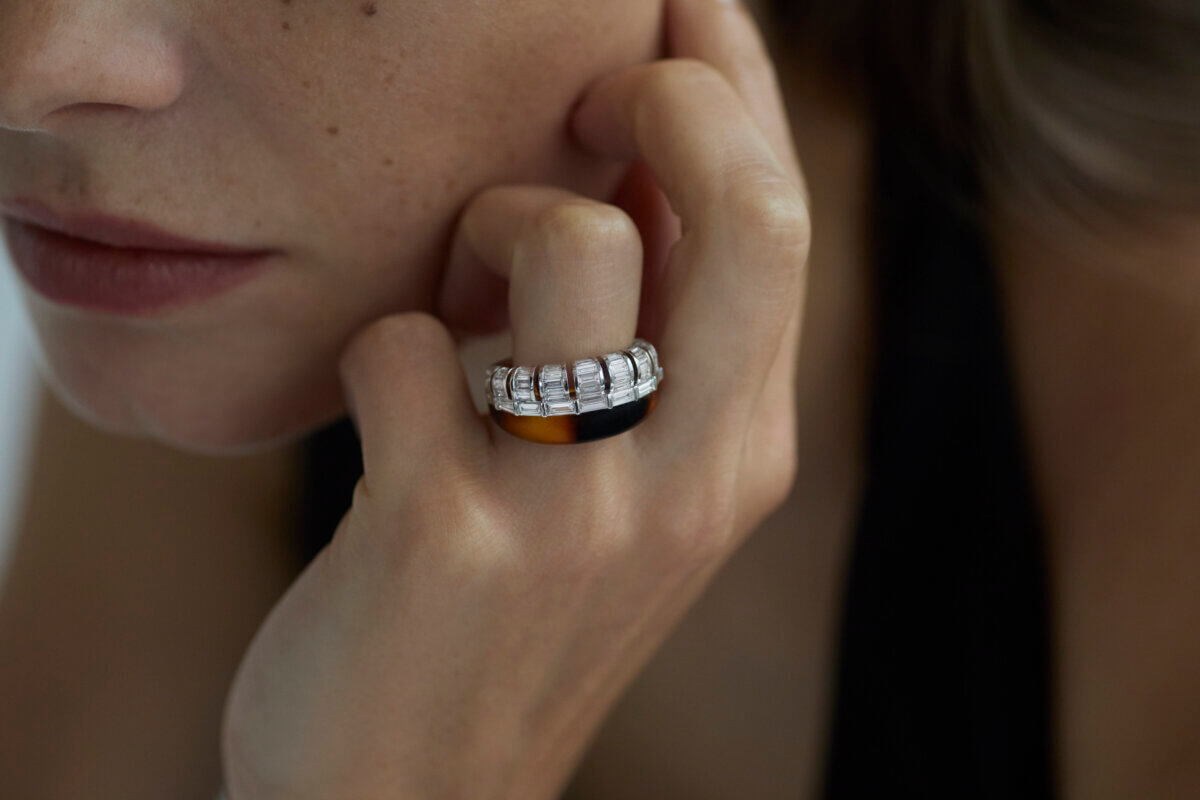
Image courtesy of Nikos Koulis
Nikos Koulis
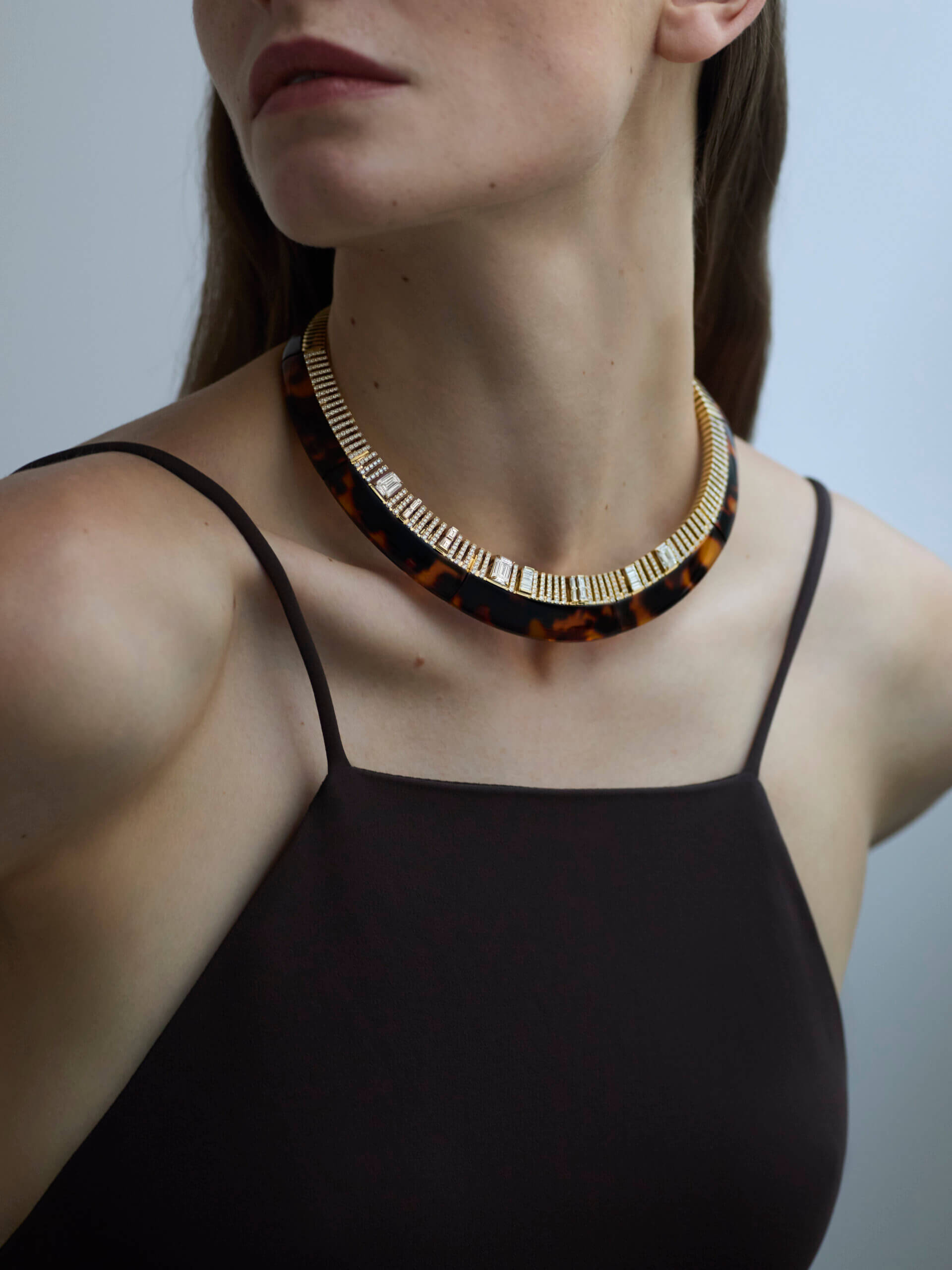
From the smallest pieces to the grandest masterworks, Nikos Koulis has always used baguettes in his designs. And his new 77 collection is no exception. Named after the year he was born, Nikos shows how baguettes can add character to a jewel.
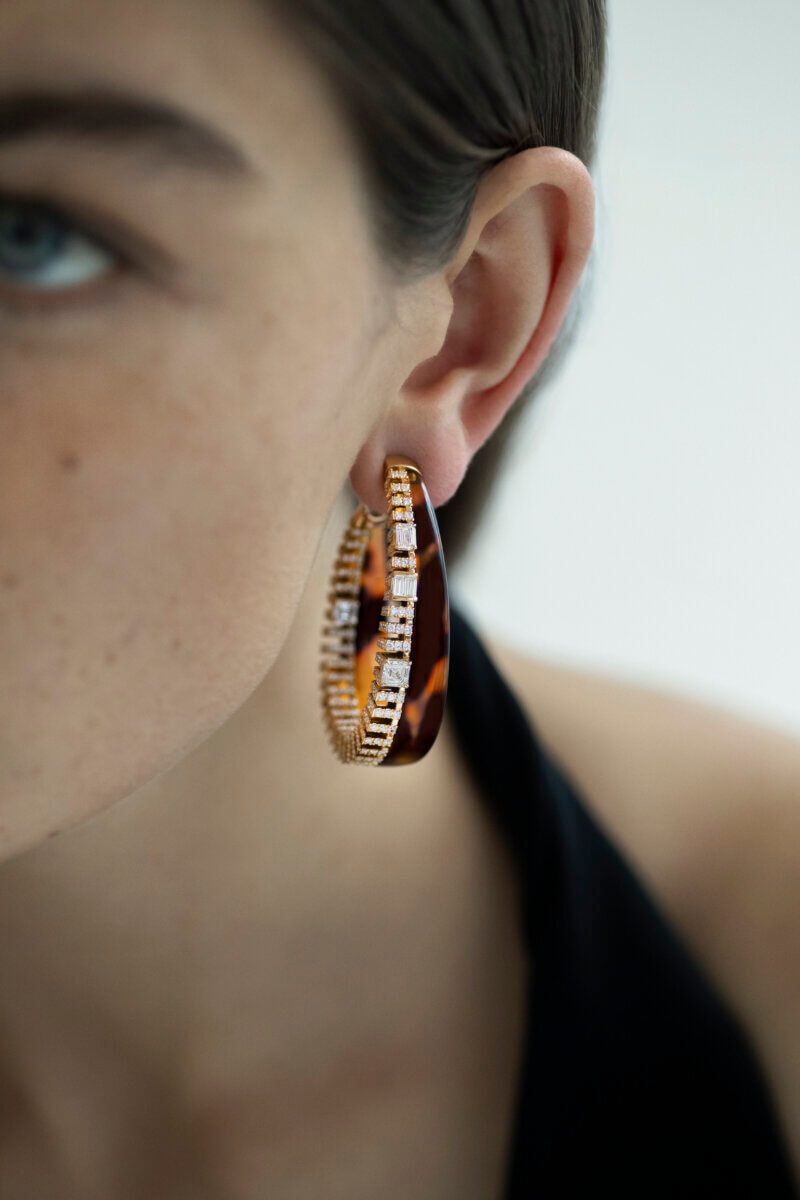
Image courtesy of Nikos Koulis
Baguette diamonds are worked into pillars, paths and piano keyboard-style patterns alongside the cellulose acetate (a renewable, plant-based material) that forms the foundation of the designs.
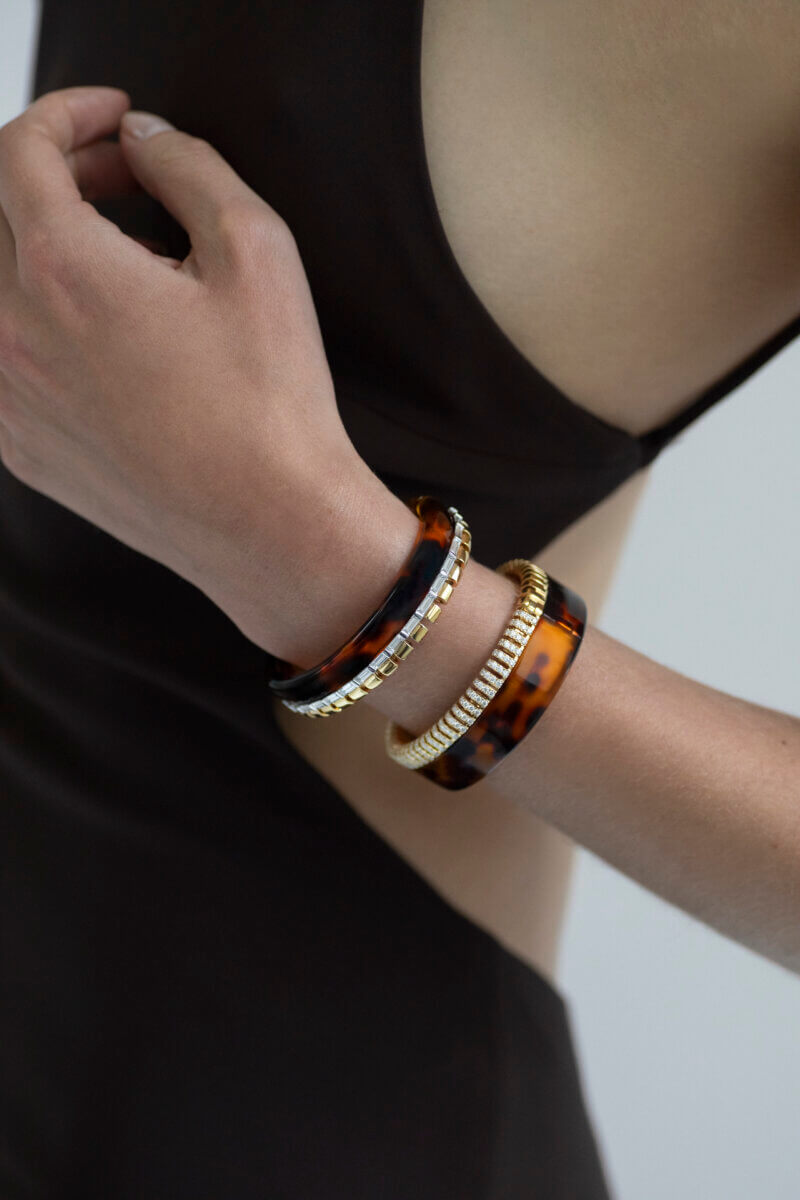
Image courtesy of Nikos Koulis
The idea for the 77 collection, which has been enthusiastically received by press and clients, came from Nikos’s beloved Jacques Marie Mage sunglasses, that sit on his office desk in Athens when they are not shielding his eyes from the sun that often pours into the room. He became enchanted by the tortoiseshell pattern on the acetate of the frames and realized it would infuse diamond jewelry with a moody and modern texture.
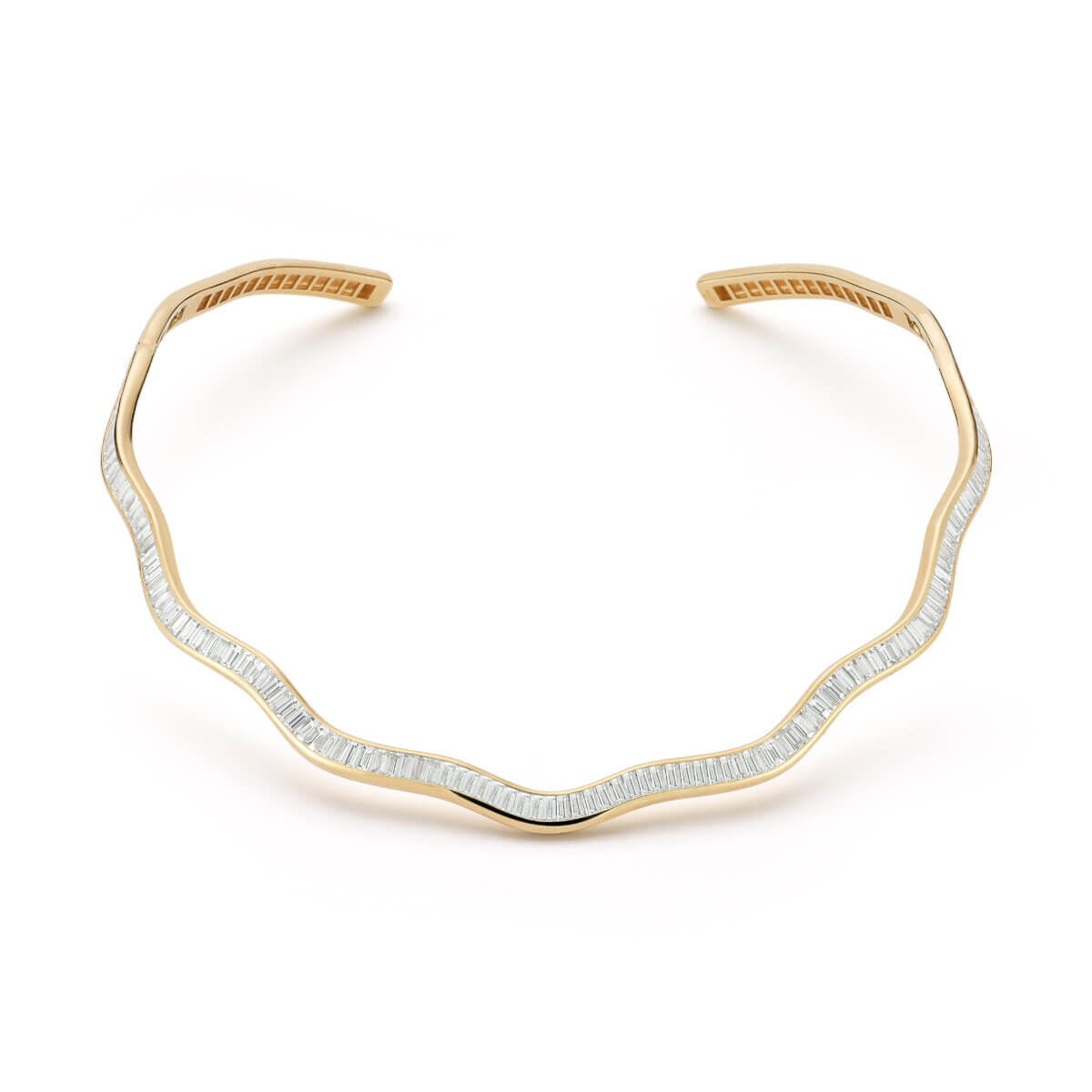
Image courtesy of Renna
Renna
Baguettes are part of the step-cut family of gem shapes. They have long, linear facets that resemble stairs ascending the crown. Renna Taher takes the geometry of the shape and gives it an organic vibe. “My designs tend to be full of movement and curves, which requires many of the baguettes we use to be custom-cut to achieve a seamless curvature,” she explains. “It’s a meticulous process, but the final products are so elegant that it’s worth it.”
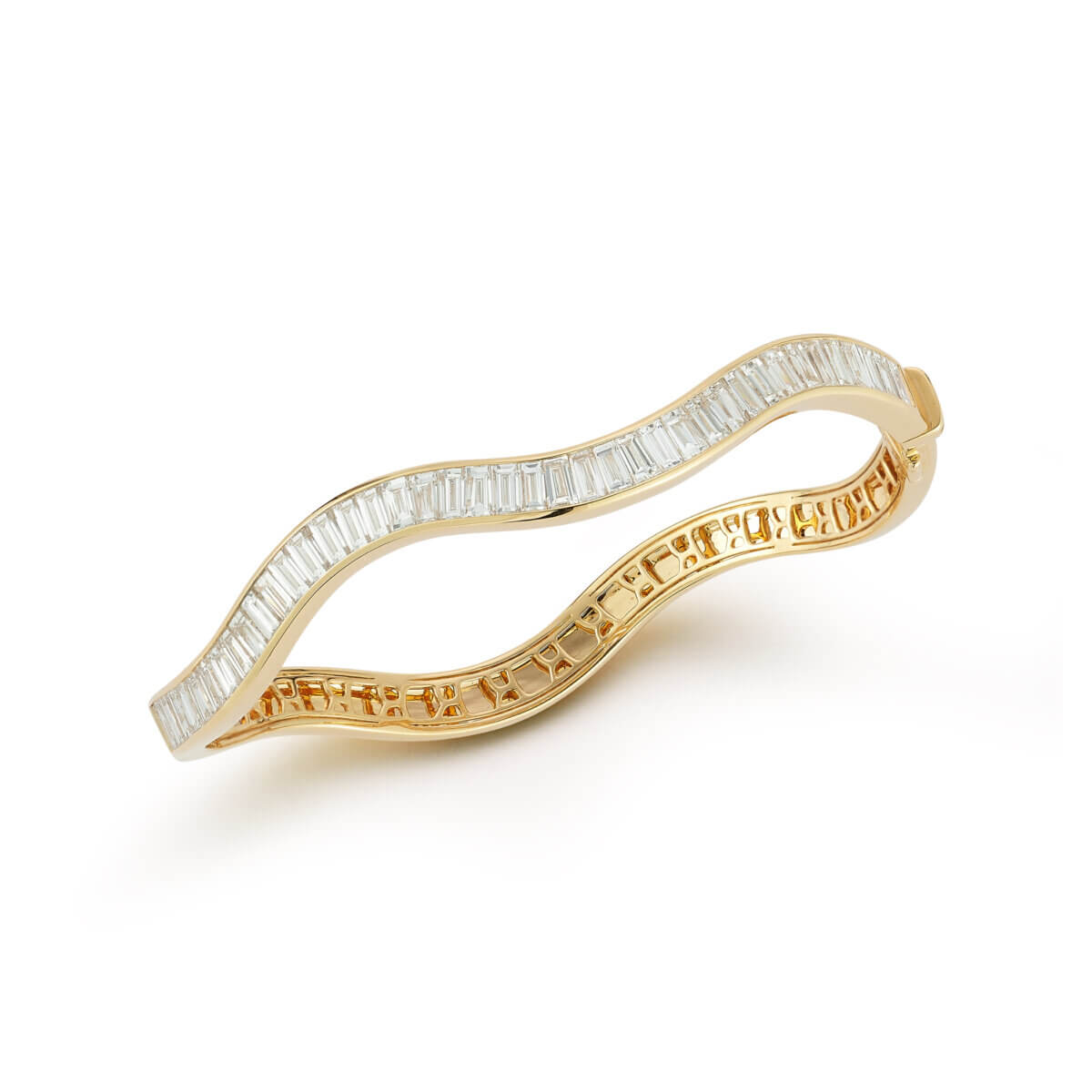
Image courtesy of Renna
Shaping each of the gems and setting them vertically, so they can go with the flow, delivers a sophisticated shimmering light to her Waved Equator Collar Necklace, Cuff and Ring. In other Equator pieces in the collection, Renna sets the baguettes horizontally, which makes the overall look entirely different.
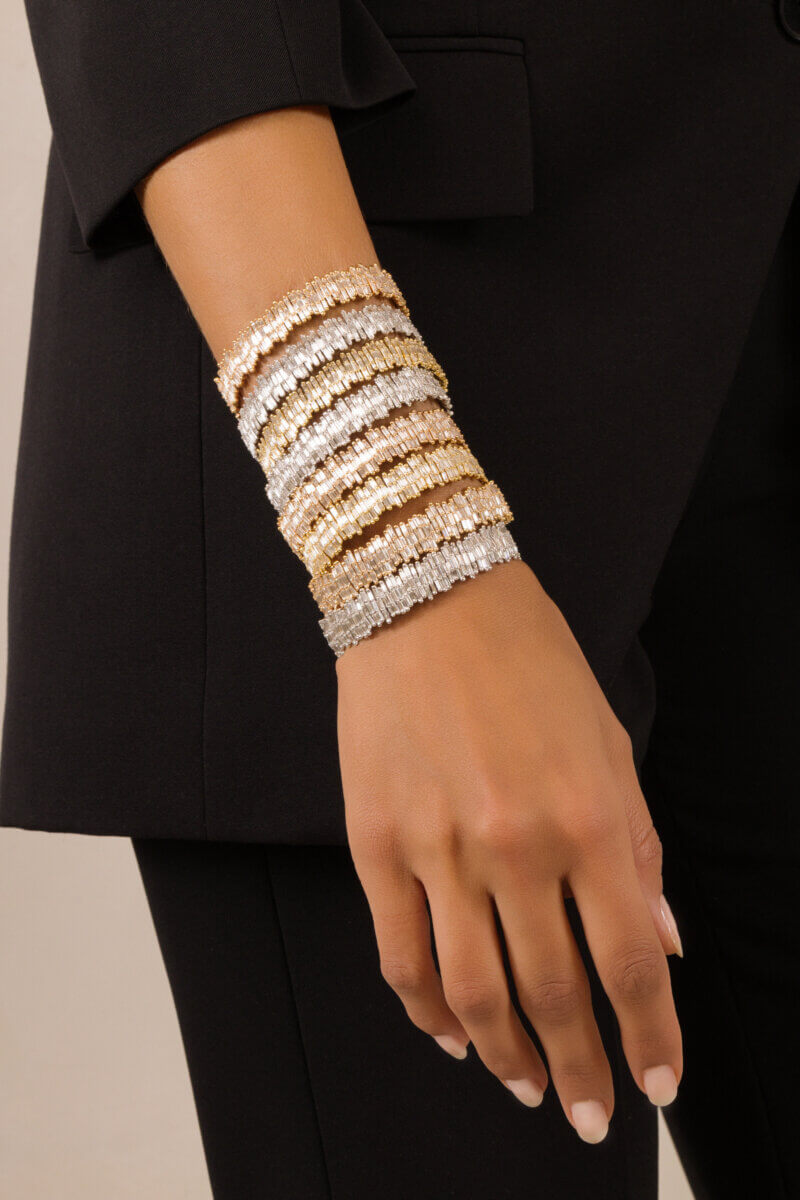
Image courtesy of Suzanne Kalan
Suzanne Kalan
Long before the current baguette-cut diamond renaissance, way back in 2013 to be exact, designer Suzanne Kalan made the gem shape the focus of her work. At some point over the years, she was christened the “Queen of Baguettes” and with good reason. Suzanne has taken baguettes and made them her own in her signature Diamond Fireworks Collection.
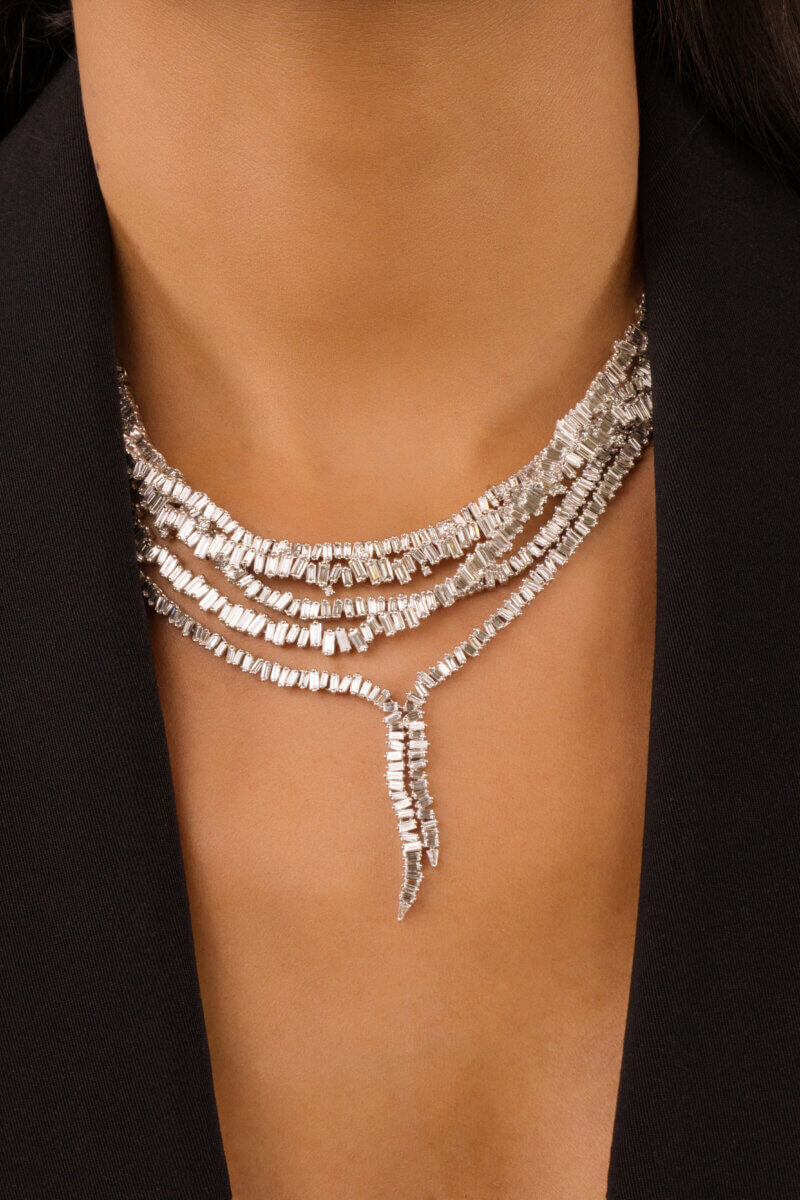
Image courtesy of Suzanne Kalan
Inspired not only by the namesake pyrotechnics, but also the idea of controlled chaos, Suzanne uses skinny little baguettes and sets them at all kinds of angles in necklaces earrings, bracelets and rings. The ball prongs she places at the top and the bottom of the gems add to the look of an explosion in the design by practically subtly giving tips to the ends.
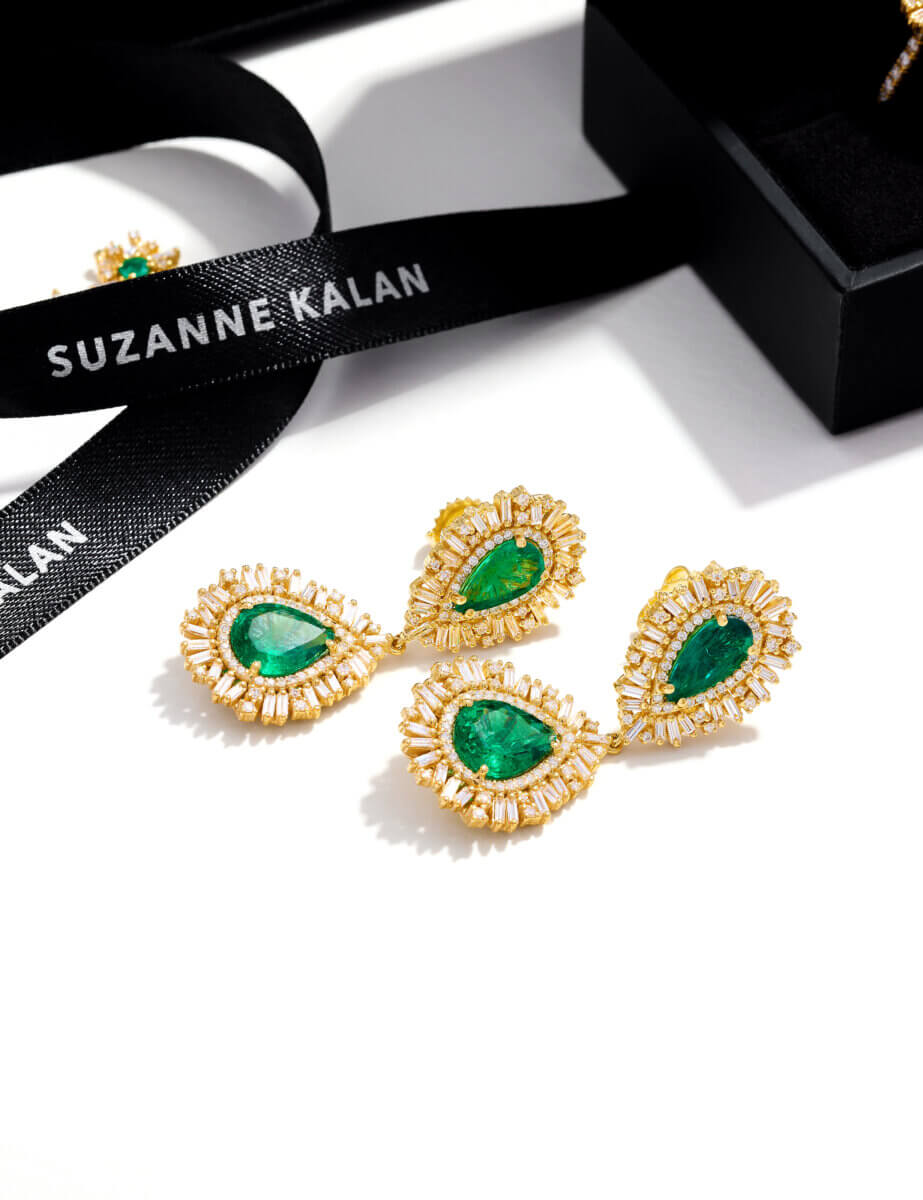
Image courtesy of Suzanne Kalan
The core pieces in the collection are solely based on a jumble of baguettes in the setting. Special designs include colorful gems like emerald and other diamond shapes.
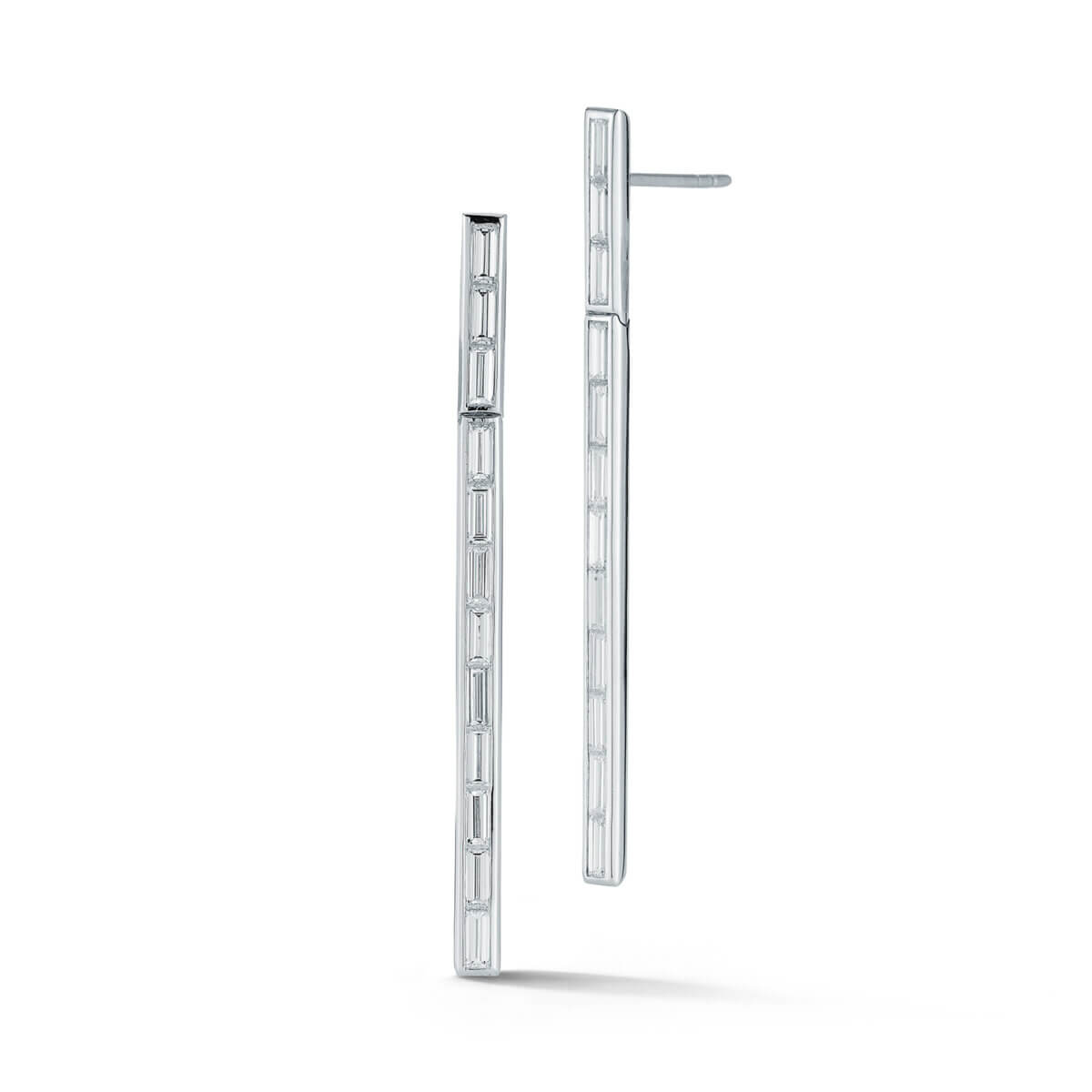
Image courtesy of Walters Faith
Walters Faith
Walters Faith designer Mollie Faith Good is a master of making classics with a twist. One way she does the twist is with baguettes. Long stick earrings are lined with the linear gem. Diamond tennis bracelets and hoop earrings have a sleek shine with horizontally set baguettes packed closely together.
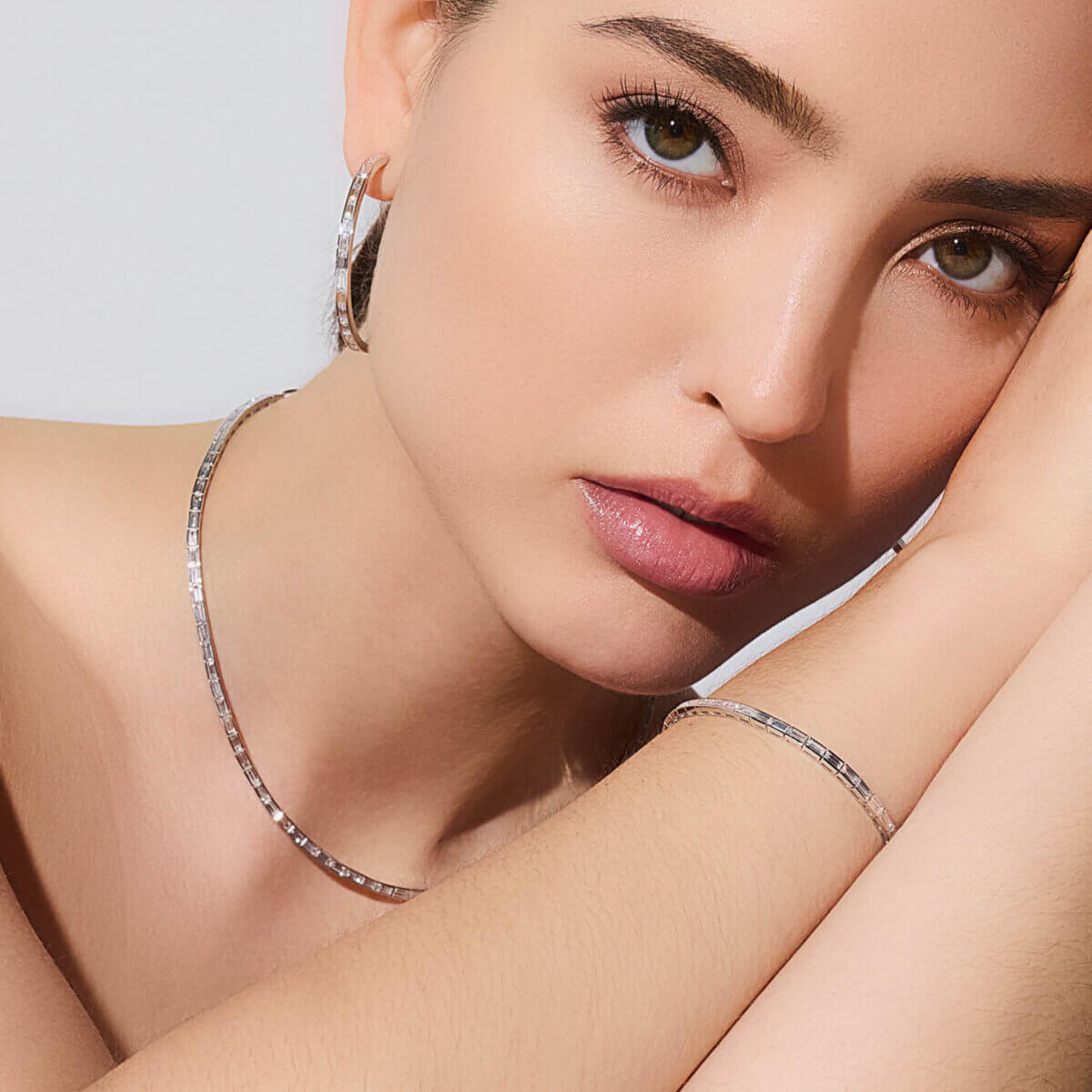
Image courtesy of Walters Faith
In other hoops and slender band rings, she transforms baguettes into dashes leaving some space between the gems.
“I’ve always loved the beauty of baguettes,” Mollie explains. “Their clean lines have a tailored elegance and their softer scintillation feels wonderfully understated.”
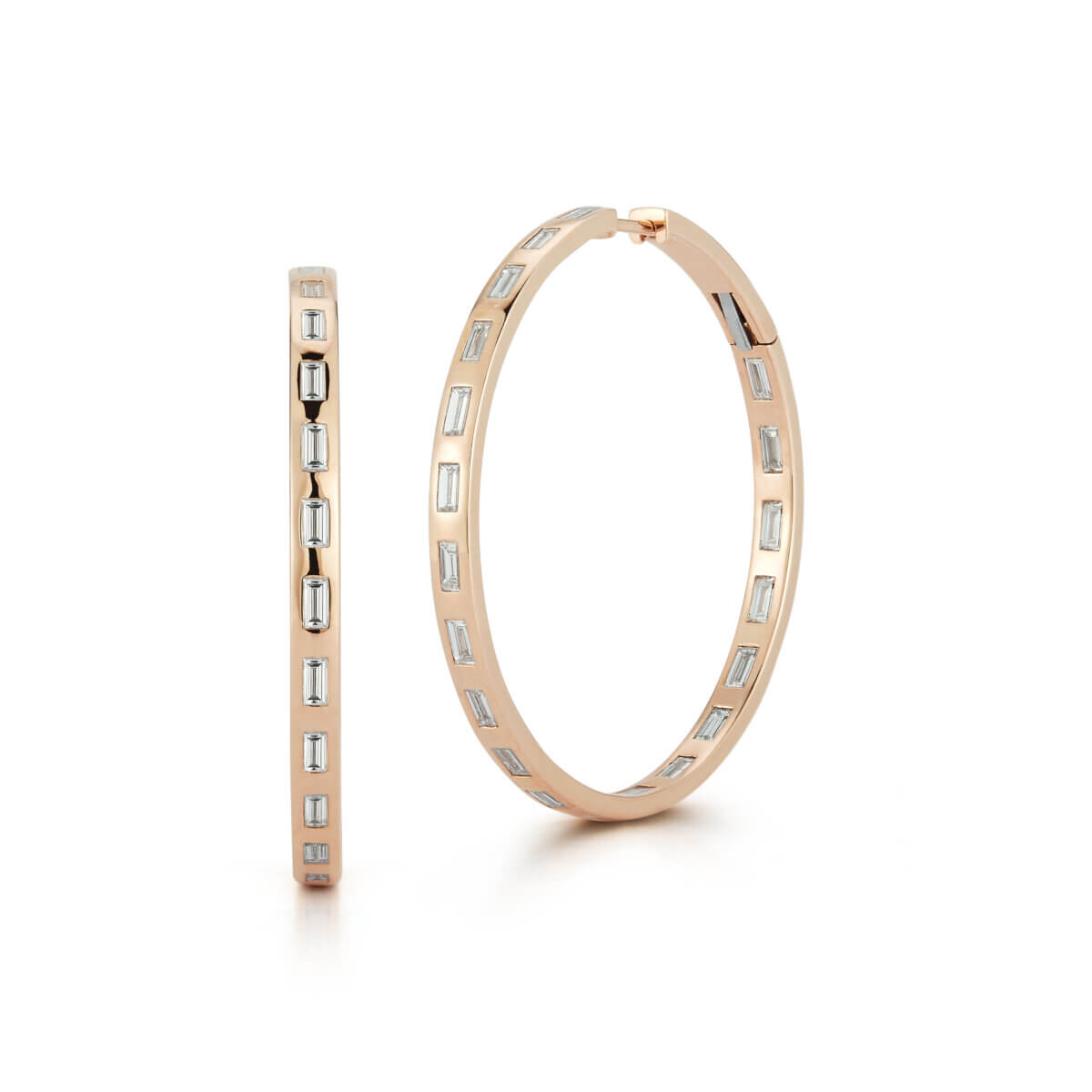
Image courtesy of Walters Faith
Marion Fasel writes about contemporary trends and jewelry history in The Adventurine newsletter on Substack. The author of 11 books focusing on 20th-century jewelry design, Marion’s most recent publication, The History of Diamond Engagement Rings, was named “One of the best coffee table books for 2026” by The Wall Street Journal.
You May Also Like
-
Trend Report: Narrative Jewelry
The Lucas Museum of Narrative Art, which opened a couple of weeks ago in Los Angeles, is the first major institution dedicated to visual storytelling. Founded and funded,...
 Read Now 4 Min Read
-

Trend Report: Tie on a Bolo
When it comes to jewelry, it doesn’t get much more Western than a bolo tie. The accessory, which historically hasn’t been worn much east of the Mississippi, is...
Read Now 4 Min Read -
Trend Report: Little Hoops with Big Charms
Hoops are in a constant state of motion. Variations move through the trend cycle annually, if not seasonally, because they are one of the most joyful and easy-breezy...
Read Now 4 Min Read